Why SmartyMe Stands Out in the Learning App Space
The learning app space has a lot of options now. Some focus on languages, some on professional skills, some on specific certifications or test prep. Most of them are built around a clear goal - finish a course, pass an exam, master a language. SmartyMe takes a different approach. It's built less around finishing things and more around fitting steady learning into how people actually live their days. That distinction is small on paper but makes a real difference in how the app feels to use.
A Format Built Around Time You Already Have
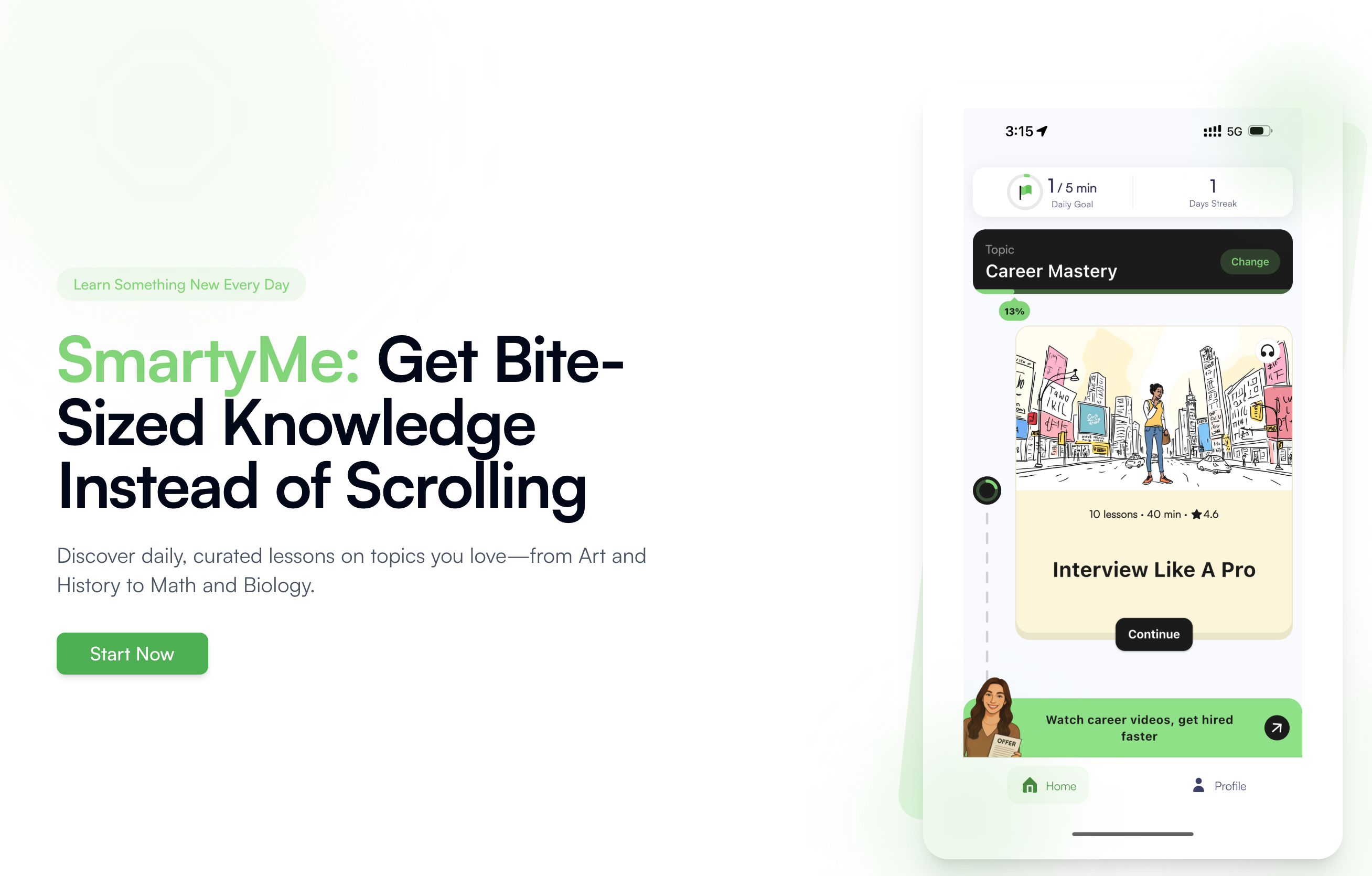
The first thing that sets SmartyMe apart is the explicit decision to keep lessons at around 15 minutes. This isn't a marketing detail - it shapes everything else about the app. Lessons are short enough to finish during morning coffee, a commute, a lunch pause, or a few quiet minutes before bed. The format doesn't compete with the rest of your day for time; it slips into pockets that already exist.
This makes the daily habit easier to build because there's no need to "make time" for it. A 15-minute window typically already exists somewhere in the day - between tasks, before bed, during a commute. SmartyMe slots into one of those windows, which lowers the threshold for actually using it on a busy day. After a few weeks of use, the 15-minute window starts to feel like a natural part of the rhythm rather than a scheduled commitment.
Specific Things That Make It Different
Beyond the lesson length, several practical features shape the experience in ways that aren't immediately obvious from the App Store description:
- Audio mode runs in the background - you can finish a lesson during a walk, while cooking, or in transit, hands-free.
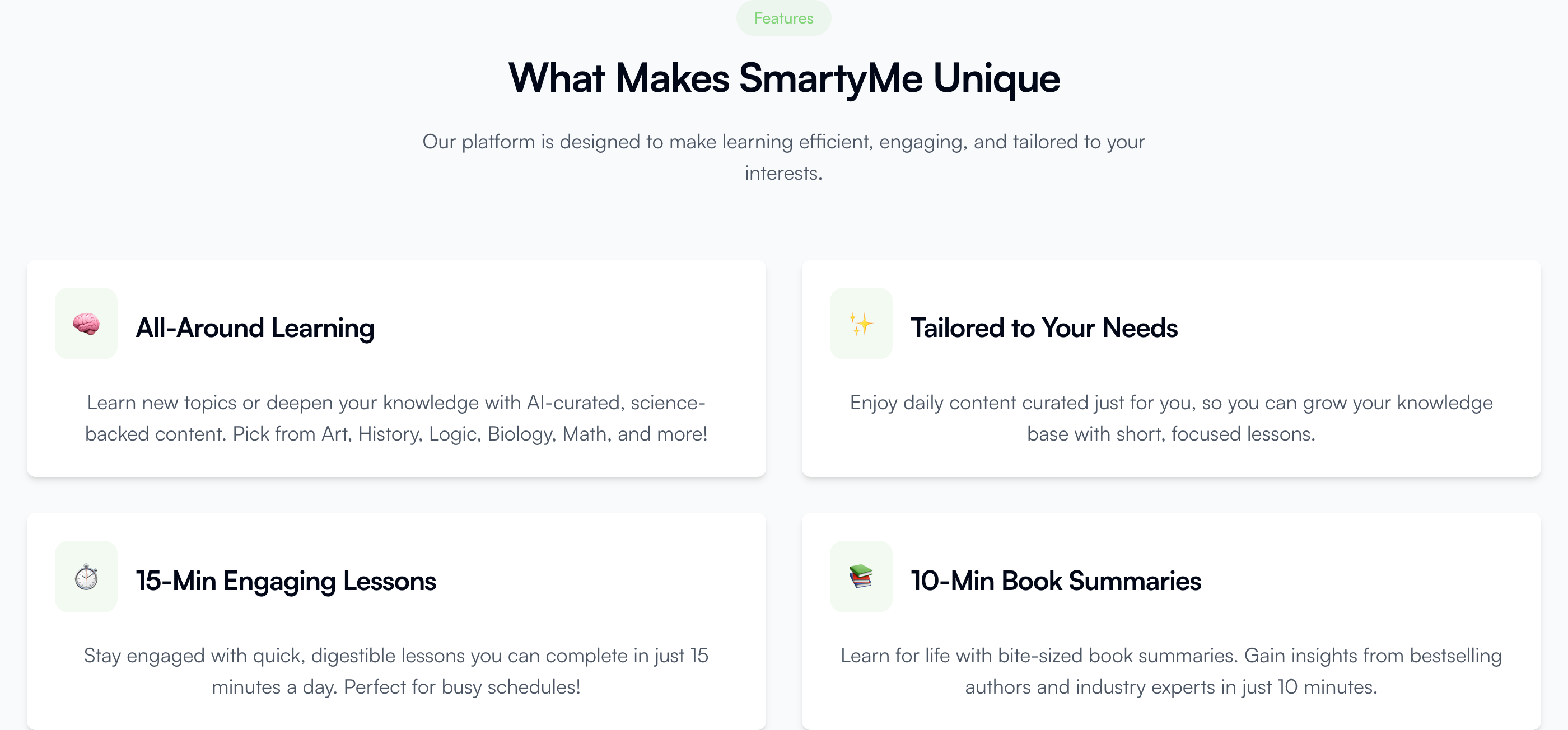
- Topic breadth without single-subject lock-in - 20 topics from communication to history to logic, with the freedom to switch whenever you want.
- A streak system that supports rather than pressures - the daily goal is set low enough that one short lesson keeps consistency going, even on a tough week.
- Interactive games inside courses - small moments built into lessons that break up reading and help concepts stick.
These pieces work together. The audio mode would be less useful without the breadth of topics; the topic variety would feel overwhelming without the relaxed pacing. As of April 2026, the app contains 203 courses and 1064 lessons across those 20 topics, and the way they're organized makes browsing for something interesting genuinely easy rather than overwhelming.
For people who want a sense of how the format plays out before signing up, the official Reddit community has a pinned post that walks through the basics: https://www.reddit.com/r/Smartymeapp/comments/1qp7lr5/welcome_to_rsmartymeapp_you_can_start_here/. The recommended approach there matches how the app is designed - pick one topic that genuinely interests you, do one short lesson per day, and let the habit build from there.
The User Base That Reflects the Approach
A platform's user base tends to reveal what kind of product it actually is. SmartyMe has 1.5M downloads and around 400,000 active users (April 2026), and they come from a varied mix of backgrounds and learning goals. The app doesn't position itself as a career tool, a language tool, or a test prep tool - it supports daily curiosity, whatever shape that takes for each user.
The 4.6 rating in the US App Store and 4.1 on Trustpilot (April 2026) come from this varied audience. Different platforms attract different types of reviews, but the consistent themes across both - short lessons, broad topics, supportive structure - match what users describe in longer personal posts. The picture is consistent across sources, which makes the daily experience easier to predict before signing up.
What This Means for Choosing It
What makes SmartyMe stand out isn't a single standout feature. It's the combination of decisions: short format, audio support, topic breadth, low-pressure consistency, and an interface that stays out of the way. Each piece on its own exists in other apps in some form. Together, they create an experience that fits into existing routines rather than asking you to build new ones.
For deciding whether the app fits, the practical question is whether short daily learning across varied topics is what you actually want from a learning tool. If you're looking for deep mastery of one subject, structured certifications, or a specific language program, the format isn't built for those goals. If you want a quiet daily habit that adds up over months, the rhythm here tends to fit naturally. The honest test is just to spend a week with it and see whether the daily 15 minutes feel like something you keep returning to without forcing it.
Related Article